Archives
- 2018-07
- 2019-07
- 2019-08
- 2019-09
- 2019-10
- 2019-11
- 2019-12
- 2020-01
- 2020-02
- 2020-03
- 2020-04
- 2020-05
- 2020-06
- 2020-07
- 2020-08
- 2020-09
- 2020-10
- 2020-11
- 2020-12
- 2021-01
- 2021-02
- 2021-03
- 2021-04
- 2021-05
- 2021-06
- 2021-07
- 2021-08
- 2021-09
- 2021-10
- 2021-11
- 2021-12
- 2022-01
- 2022-02
- 2022-03
- 2022-04
- 2022-05
- 2022-06
- 2022-07
- 2022-08
- 2022-09
- 2022-10
- 2022-11
- 2022-12
- 2023-01
- 2023-02
- 2023-03
- 2023-04
- 2023-05
- 2023-06
- 2023-07
- 2023-08
- 2023-09
- 2023-10
- 2023-11
- 2023-12
- 2024-01
- 2024-02
- 2024-03
- 2024-04
- 2024-05
-
Bran is a byproduct of flour milling typically
2024-05-15
Bran is a byproduct of flour milling, typically utilized as a valuable component of animal feeds. Because of its attractive technological and health-promoting properties, it NSC74859 has also been increasingly used in food manufacturing as a source of dietary fiber. Indeed, with the growing interes
-
Immunohistochemistry Hearts from young and aged
2024-05-15
Immunohistochemistry: Hearts from young and aged mice were collected at the indicated times, fixed overnight in 10% formalin, and embedded in paraffin. Serial 5-μm heart sections from each group were analyzed. Samples were stained with H&E for routine histologic examination. Immunohistochemical stai
-
br Neurological development and BCAAs
2024-05-14
Neurological development and BCAAs Glutamate is an important excitatory neurotransmitter in the brain, and BCAAs (especially leucine) function to synthesize glutamate in astrocytes around neurons, since leucine enters the brain from the blood more rapidly than other LY2940680 mg and provides ∼25%
-
br Experimental br Acknowledgment br Introduction The NADPH
2024-05-14
Experimental Acknowledgment Introduction The NADPH-dependent reduction of d-glucose catalyzed by aldose reductase (E.C.1.1.1.21) (AR) is considered as one of the phenomena leading to the onset of long term diabetic complications [as review see: [1], [2]. In fact, the reduction of the sugar,
-
In addition to the above mentioned synaptic mechanisms the s
2024-05-14
In addition to the above-mentioned synaptic mechanisms, the serotonergic system also has a critical role in the antidepressant effects of mGlu2/3 receptor antagonists. Indeed, we previously reported that mGlu2/3 receptor antagonists increased the firing rate of serotonin neurons in the dorsal raphe
-
Adenosine A A agonists have been shown to significantly redu
2024-05-14
Adenosine A2A agonists have been shown to significantly reduce albuminuria in diabetic mice as well as plasma creatinine [24]. Proteinuria was greater in diabetic A2A knock-out (KO) mice than diabetic wild type (WT) mice [24]. Consistent with these findings, our laboratory initially found that prote
-
The physiological effect of adenosine is now considered
2024-05-14
The physiological effect of adenosine is now considered a new direction in halting the progression of organ damage in cardiovascular disease [24], [25], [26]. Adenosine has diverse functions, depending on its interaction with different receptor subtypes: A1, A2A, A2B, and A3[24], [25], [26]. Stimula
-
The difference in the mean values of serum ADA
2024-05-14
The difference in the mean values of serum ADA in sputum positive PTB and controls was found to be highly significant (P Discussion Tuberculosis is a major health problem in India, and out of all its forms PTB is the commonest. A definite diagnosis of PTB can be made with the presence of prolyl hy
-
br Results br Discussion Utilizing a proteomic approach
2024-05-14
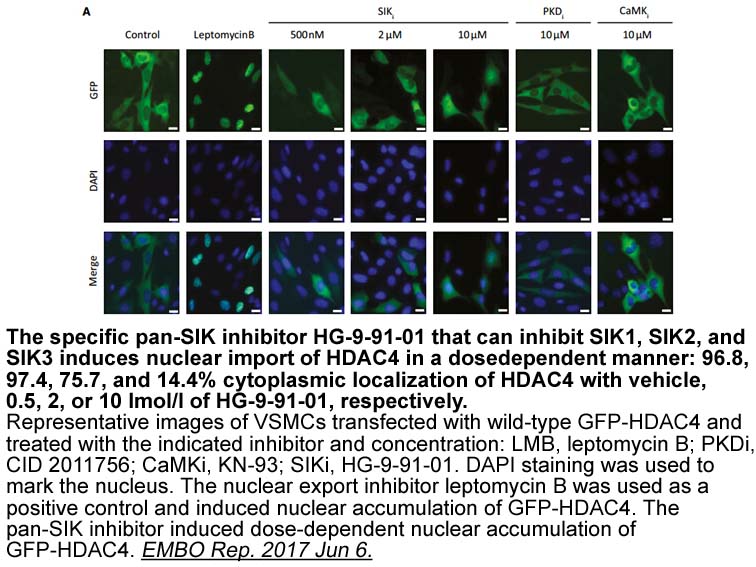
Results Discussion Utilizing a proteomic approach, we identified HSP90β as a protein that becomes associated with surface AChR in agrin-stimulated muscle cells. We demonstrate that HSP90β does not interact with the AChR directly; instead, via direct interaction with rapsyn, HSP90β becomes asso
-
Chlorhexidine digluconate sale Compounds were profiled for t
2024-05-14
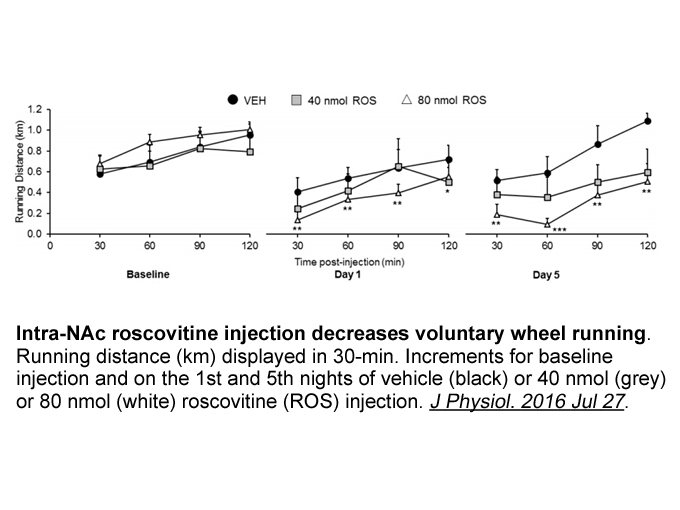
Compounds – were profiled for their inhibitory activity against dipeptidyl peptidase-IV Activity and/or Structure Homologues (DASH) [e.g. DPP2, DPP8 and DPP9] and non-DASH [eg. post-proline cleaving enzyme (PPCE), neutral endopeptidase (NEP), aminopeptidase P (APP), aminopeptidase N (APN)] enzymes.
-
Neural activity resulting from sensory experience is require
2024-05-13
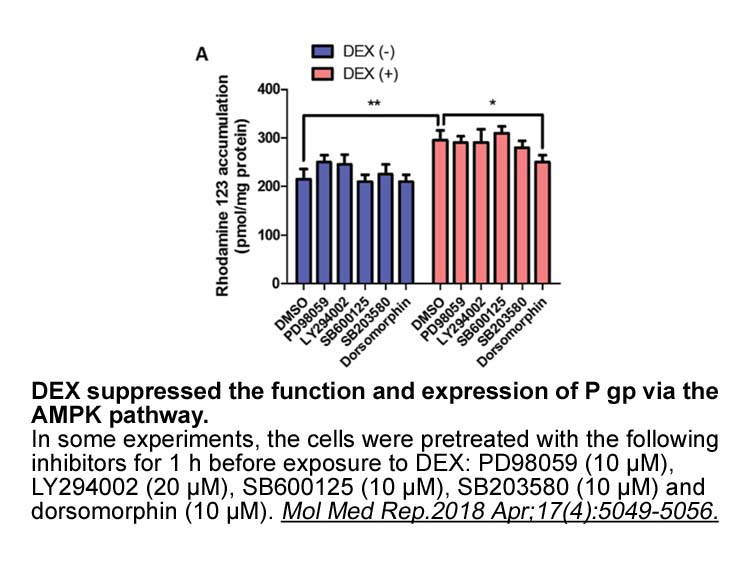
Neural activity resulting from sensory experience is required for the refinement and maturation of neural circuits during cortical critical periods. This refinement is thought to be important for functional optimization of primary sensory cortices, enabling critical functions such as feature detecti
-
We recently identified a G A dependent epigenetic
2024-05-13
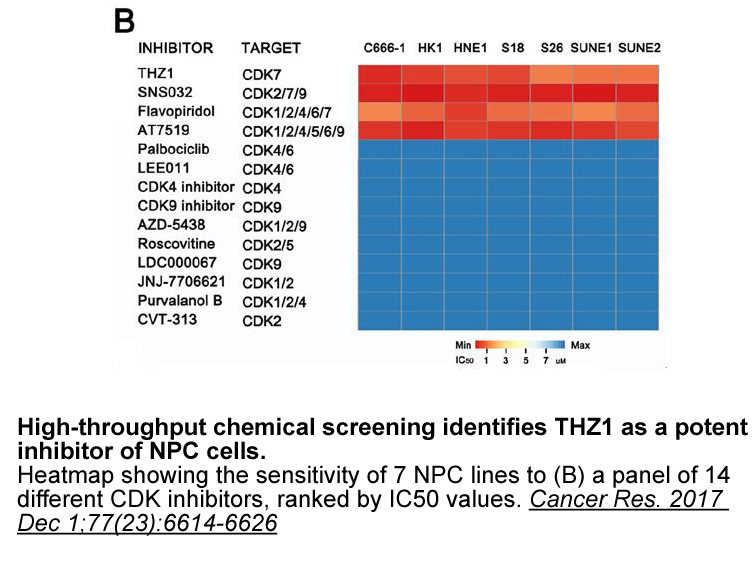
We recently identified a G9A-dependent epigenetic mechanism for transcriptional activation of the serine pathway in cancer cells (Ding et al., 2013). G9A, also known as EHMT2 and KMT1C, is a H3K9 methyltransferase that has a primary role in catalyzing H3K9me1 and H3K9me2 in euchromatin (Shinkai and
-
br Role of OCT in histamine clearance
2024-05-13
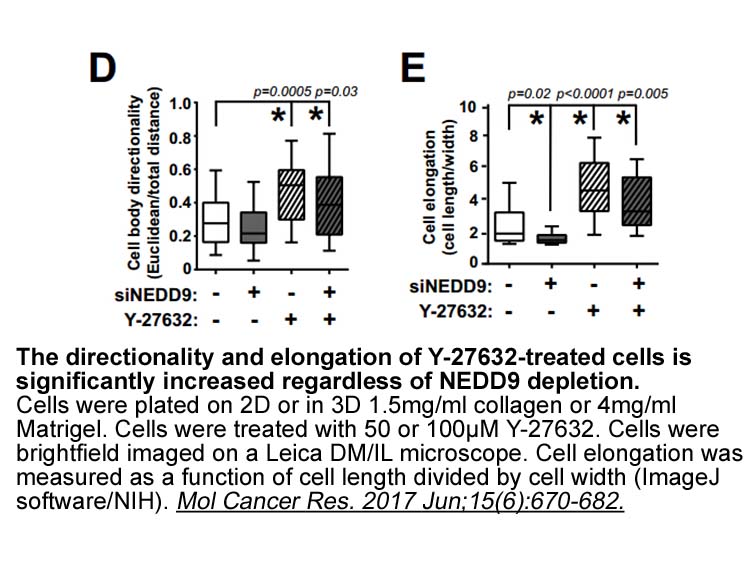
Role of OCT3 in histamine clearance Histamine is a powerful neuromodulator, as well as a regulator of immune processes and vascular tone in the central nervous system (Gross, 1981; Haas et al., 2008; Jutel et al., 2006). In contrast to 5-HT and the catecholamines, a high-affinity transporter for
-
The ARHL locus ahl that contributes
2024-05-13
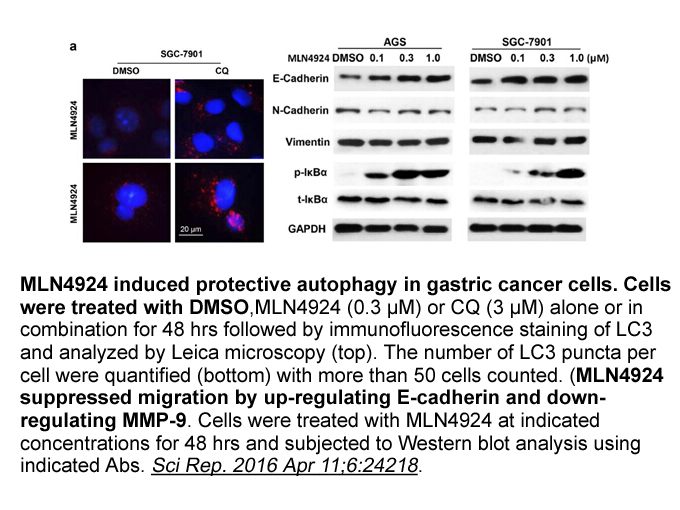
The ARHL locus (ahl) that contributes to the hearing loss in the C57BL/6J mouse has been mapped to chromosome 10 (Erway et al., 1993, Johnson et al., 1997). It has been shown that strains susceptible to early onset ARHL carry a specific mutation in the cadherin 23 gene (Cdh23), which encodes a compo
-
Alosetron The difficulty of characterizing nAChRs in the
2024-05-13
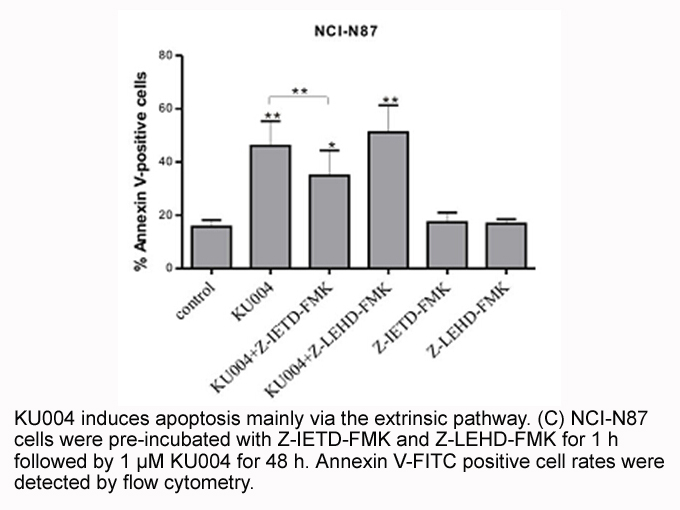
The difficulty of characterizing nAChRs in the central nervous system is also exemplified by early observations that nicotine caused no detectable effect when applied on a brain slice and it is only with the focal and high time resolution of more recent experiments that the effects of nicotinic neur